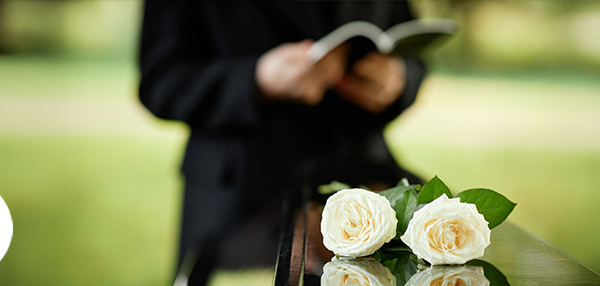
While some may think our current funeral practices are a product of post-Christianity times, researchers have found burial grounds of Neanderthal men from more than 60,000 B.C., which included flowers. These momentos indicate a funeral ritual and type of remembrance common in today’s traditions.
According to a recent study by the Funeral and Memorial Information Council (FAMIC), memorials, traditions and expressions of love, such as flowers placed on a grave, contribute to healing after losing a loved one.
Rituals, remembrances, and traditions are a way to express gratitude and love. Throughout the world, however, there are many less traditional and perhaps quirkier funeral practices or rituals.
Take, for instance, the ritual of Famadihana—dancing with the dead—which the Malagasy people of Madagascare perform every five to seven years. This ritual is intended to hasten the spirit of the dead to his or her afterlife.
Famadihana involves opening the tombs, rewrapping the bodies in fresh burial clothes, and writing their names on the cloth. The Malagasy then carry the corpses over their heads while music plays. They believe this will speed up decomposition and hasten the spirit of the dead to the afterlife.
A similar practice is performed in Varanasi, India, where people parade the bodies of the dead through the streets. Bodies are dressed in vibrant colors, such as red, which symbolizes purity. Bodies are sprinkled with water from the Ganges River, then cremated.
Sky burial is also meant to hasten one’s spirit among the Buddhists in Tibet. However, this ritual is not for the faint of heart; it involves leaving the body outdoors—often cut into pieces—to make it easier for birds and other predators to consume. The Buddhists believe this serves two purposes: to embrace the circle of life and provide food for animals.
The Zoroastrian tradition in Iran also involves sky burial. They leave corpses outside to be eaten by birds, but their belief is that death is evil and decaying bodies is sacrilegious. The tradition involves laying the dead on top of a dakhma, a circular tower purposely built so bodies do not contaminate the ground. This tradition started more than 3,500 years ago, and still exists today in some areas of Iran, although outlawed decades ago.
In the Philippines, several burial traditions exist among the indigenous cultures. For example, the Tinguian people dress the dead in fancy clothes, prop them in a chair and put a lit cigarette in their mouths. They usually leave the dead sitting that way for weeks. The Benguet blindfold their dead before placing them in a chair (no cigarette though). In the city of Cavit, near Manila, people often burial their dead vertically in a hollowed-out tree. Prior to death, the person chooses the tree for burial.
In South Korea, a country roughly the size of Oregon with seventy percent of it being mountains, cremation becomes a more realistic option. People use cremated remains to create beads, which are placed inside vases or displayed on dishes.
Modern mummification takes place among the Anga people of Papua, New Guinea, who believe the dead are more easily remembered than if buried. The Anga seat the corpse over open flames for three months, which prevents decomposition. The body is then poked with sticks to drain the fluids. No body part is allowed to touch the ground. Once mummification is complete, the Anga strap the mummy to a chair and place it atop a cliff, where it can protect the living.
Water is part of burial rituals in Nordic countries. Practices vary from laying coffins atop cliffs, facing the water; to setting bodies adrift in ‘death ships’ along a river or sent into the ocean; giving the bodies back to the gods.
Closer to home, England, France and Germany practice rituals similar to those in the United States; usually in a church setting, cemetery or significant location. While wearing black is no longer required for mourners, people in those countries continue to follow that dress code.
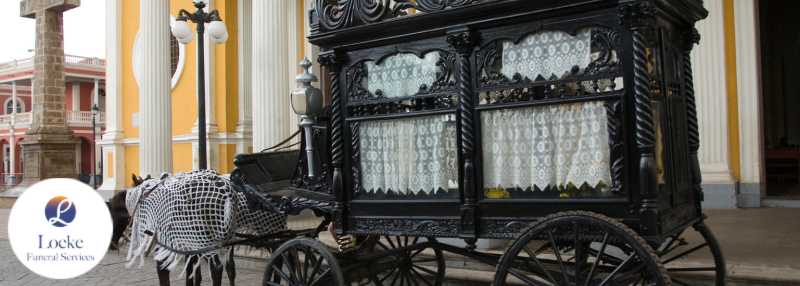
In Germany, social class may dictate the type of funeral; for example, the wealthy may opt for a horse-drawn hearse and men in black coats accompanying the coffin. Other traditions include burying a loved one in a biodegradable box, and placing the box at the roots of a tree.
While these rituals and traditions may seem irreverent, quirky, or just plain strange, death is the one thing that unifies us a humans, regardless of how we celebrate and memorialize our dearly departed.
Resources
7 Unique Burial Rituals Across the World | Britannica
Evolution of American Funerary Customs and Laws | In Custodia Legis (loc.gov)
Death Rituals and Funeral Traditions Around the World (matadornetwork.com)
Momentos Mori: The Materials of Mourning (ucf.edu)
Mourning Clothing – Women & the American Story (nyhistory.org)