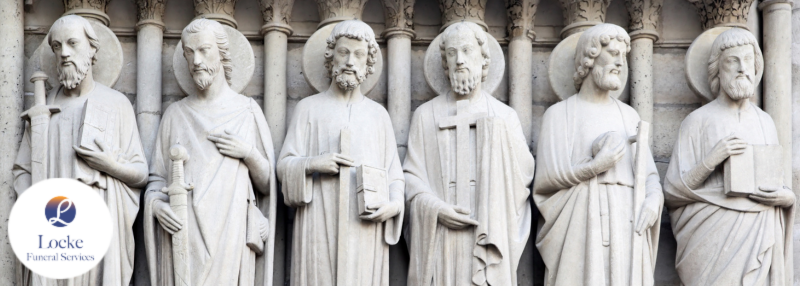
All Saints’ Day, a religious holiday celebrated on November 1st, is a day dedicated to honoring all the saints, known and unknown, who have played significant roles in the history of Christianity. This sacred observance, with a rich history spanning centuries, has evolved over time to become a prominent fixture in the Christian calendar.
Source: “What is All Saint’s Day?” Oct. 12, 2023.
Ancient Origins
It is believed that the ancient Celtic festival of the dead, Samhain, was the precursor to All Saints’ Day. Samhain marked the end of the harvest and the beginning of winter; a time when the spiritual world and the physical world most closely aligned. People lit bonfires and wore masks and animal skins to ward off spirits. Feasts were prepared to honor the dead.
Although a harvest celebration, it was also considered one of the most evil festivals of the year, because celebrants believed it opened a door to the “Other World,” inviting souls of the dead in.
According to Britannica.com, “… the world of the gods was believed to be made visible to humankind, and the gods played many tricks on their mortal worshippers; it was a time fraught with danger, charged with fear, and full of supernatural episodes. Sacrifices and propitiations of every kind were thought to be vital, for without them the Celts believed they could not prevail over the perils of the season or counteract the activities of the deities.”
Many believed the following day, November 1 (on modern calendars), marked the beginning of a new year.
Pagan traditions of Samhain were incorporated into the religious holiday of All Saints’ Day, observed November 1.
The article, “All Saints’ Day & All Souls’ Day” states:
While Halloween is widely celebrated in the United States, for many people in Europe, the two days following Oct. 31 are publicly and privately more significant. In a practice dating back centuries, the Roman Catholic Church observes these two days as a time in which the living commemorate the dead. Nov. 1 is All Saints’ Day, a feast day observing the lives of the many saints for whom there is no specific feast day during the year. The following day, Nov. 2, marks a day of prayer for, and remembrance of, the ‘faithfully departed:’ relatives, friends and strangers, who are no longer living” (National World War I Memorial website).
Pope Boniface IV initially declared the observance to be May 13 in 609, and consecrated the Roman Pantheon into a Catholic Church, dedicating it to the Blessed Virgin Mary and all martyrs. It was the first time a pagan location had been converted into a Catholic Church. Pope Gregory III moved the date in 800 AD to November 1 as a time to honor all the saints, and likely moved the date to provide an alternative to Samhain’s pagan undertones.
All Saints’ Day: Important Historical Figures
| St. Augustine of Hippo (5th Century): | Augustine was a theologian and philosopher in the region of Hippo, North Africa. His writings on the communion of saints and remembering departed souls influenced Western philosophy and Western Christianity. |
| Pope Boniface IV (7th Century): | Initially declared May 13, 609 as All Saints’ Day, consecrating the Roman Pantheon into a Catholic Church and dedicating it to the Blessed Virgin Mary and all martyrs. |
| Pope Gregory III (8th Century): | Established November 1, 800 AD, as All Saints’ Day in the Western calendar, and decreed it as a time to honor all the saints. |
| Pope Gregory IV (9th Century): | Decreed the observance to include the entire Western Christian Church. |
| Martin Luther (16th Century): | Luther, who led the Protestant Reformation, prompted some Protestant denominations to re-evaluate the veneration of saints. His teachings greatly impacted how Christian groups approached celebrating All Saints’ Day. |
| John Henry Newman (19th Century): | Newman played a significant role in reviving All Saints’ Day in some Protestant churches, particularly emphasizing the ‘communion of saints’ concept. |
Source: “What is All Saint’s Day?” Oct. 12, 2023. Retrieved Oct. 18, 2024 from https://www.ourlittleroses.org/blog/what-is-all-saints-day/#:~:text=Lighting%20Candles:%20The%20lighting%20of,offer%20prayers%20for%20their%20souls.
Pope Gregory later expanded All Saints’ Day to a three-day festival, beginning on Oct. 31—All Hallow’s Eve; Halloween—and ending on Nov. 2 with All Souls’ Day.
The root word, ‘hallow,’ means to make holy or sacred, but Halloween, or “All Hallow’s Eve,” did not originate as a holy holiday, although it is associated with the three-day religious celebration.
Halloween was first celebrated in Ireland and Scotland in the 16th century. It is thought to have begun with the tradition of guising, where people went from house to house, putting on small skits in return for food or treats. Costumes were also part of this tradition. Guising began in North America in the early 1900s.
Evolution of All Saint’s Day
The history of All Saints’ Day, is also influenced by Martin Luther and the Protestant Reformation. In the 16th century, many Protestant churches questioned the need to honor saints and a need for such an observance. Some Protestant denominations abandoned it, while others focused only on the memory of deceased loved ones and focusing on traditions such as All Souls’ Day on November 2. This day commemorates baptized Christians, thought to be in purgatory, “because they died with the guilt of lesser sins on their souls” (Britannica.com).
In the 18th century, while European colonialism expanded, All Saints’ Day observances spread to more parts of the world, adapting it to local customs and traditions.
“This globalization of the celebration helped it transcend denominational boundaries and became a unifying force among Christians of diverse backgrounds” (Our Little Roses blog, Oct. 12, 2023).
In the 19th century, some Protestant churches revived the observance of All Saints’ Day, particularly within the Lutheran church, which embraced it as a day to remember and honor all Christians who had died. The Lutheran Church emphasized the ‘communion of saints,’ a central belief in the Christian church and part of the Apostle’s Creed.
Modern Observances
Modern practices for All Saints’ Day now include:
- Special church services honoring saints and remembering loved ones. Sometimes these services include reading names of the deceased; prayers, hymns, and Scripture readings that include the resurrection and eternal life;
- Veneration of recognized saints of the church, particularly in the Catholic and Orthodox churches; activities may include candle lighting, intercessory prayers, parades and processions;
- Visiting gravesites of deceased relatives; families may clean the gravestones and decorate with flowers, wreaths, candles, or small gifts. Prayers are also offered for the departed souls;
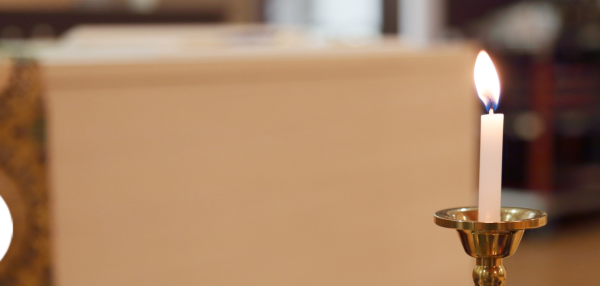
- Lighting candles at church or gravesites to honor the deceased; in many cultures candles are used to symbolize the light of Christ and hope of the resurrection;
- Performing charitable acts, such as visiting those hospital or home-bound, helping those in need or supporting a charitable organization, all in memory of loved ones;
- In some cultures, food is also part of the tradition. For example, in Mexico, the Dia De Los Muertos (Day of the Dead) is celebrated with special foods, including sugar skulls, and pan de muerto (bread of the dead). Families also prepare favorite dishes of the deceased as a way to honor their memory.
Resources
- Cana, Proinsias, Mac and Dillon, Myles. “Celtic religion”. Encyclopedia Britannica, 9 Feb. 2016, https://www.britannica.com/topic/Celtic-religion. Accessed 16 October 2024.
- Basilica of the National Shrine of the Immaculate Conception, Oct. 26, 2021, Retrieved Oct. 14, 2024. https://www.nationalshrine.org/blog/what-is-the-significance-of-all-saints-day/#:~:text=The%20feast%20that%20we%20know,saints%20to%20the%20universal%20church.
- “All Saints’ Day & All Souls’ Day,” Retrieved Oct. 16, 2024: https://www.theworldwar.org/learn/about-wwi/all-saints-day-all-souls-day#:~:text=Nov.,who%20are%20no%20longer%20living.”
- “What is All Saint’s Day?” Oct. 12, 2023. Retrieved Oct. 18, 2024 from https://www.ourlittleroses.org/blog/what-is-all-saints-day/#:~:text=Lighting%20Candles:%20The%20lighting%20of,offer%20prayers%20for%20their%20souls.
- Britannica, The Editors of Encyclopaedia. “All Souls’ Day.” Encyclopedia Britannica, 13 Dec. 2023, https://www.britannica.com/topic/All-Souls-Day-Christianity. Accessed 18 October 2024.
- https://www.ourlittleroses.org/blog/what-is-all-saints-day/#:~:text=Lighting%20Candles:%20The%20lighting%20of,offer%20prayers%20for%20their%20souls.